PROBAMA – Provenance Research
Provenances of Bamana Objects from French Sudan (Mali) between 1880 and 1914: Colonial Competition, Appropriation, and Acquisition Practices in the Collections of the Museum am Rothenbaum Cultures and Arts of the World and the Musée quai Branly-Jacques Chirac (PROBAMA)
The PROBAMA research project is dedicated to the systematic investigation of acquisition practices, object biographies, and processes of appropriation of cultural objects classified as “Bamana” from the region of what was then French Sudan, now Mali, which entered the collections of the Museum am Rothenbaum – Cultures and Arts of the World (MARKK) and the Musée du quai Branly – Jacques Chirac. The focus is on both the extensive collections of the German Africanist Leo Frobenius from his expedition of 1907 to 1909 and those objects gathered by French military personnel, scientists, and colonial officials in the decades preceding and concurrent with that period.
The aim of the project is to conduct a comparative analysis of these two collections and to reconstruct their respective political, scientific, and local dimensions in order to gain a more precise insight into their origins and the underlying colonial power relations. This includes a detailed analysis of the political and scientific contexts in which Frobenius and French actors assembled their collections, as well as an examination of the respective networks of actors, including local intermediaries, informants, and guides, who played a central role in the formation of these collections. At the same time, the systematic comparison of German and French collection practices offers new insights into the competition between two colonial powers, which significantly shaped these acquisitions.
A key objective is to more precisely determine the geographical origin of the objects and to evaluate the composition of the object categories in both collections with regard to possible parallels or significant differences. Particular attention is given to ritual objects and those significant to the “Bamana” initiation societies, which were often removed from their cultural and spiritual context and whose acquisition conditions must be examined particularly critically due to their significance.
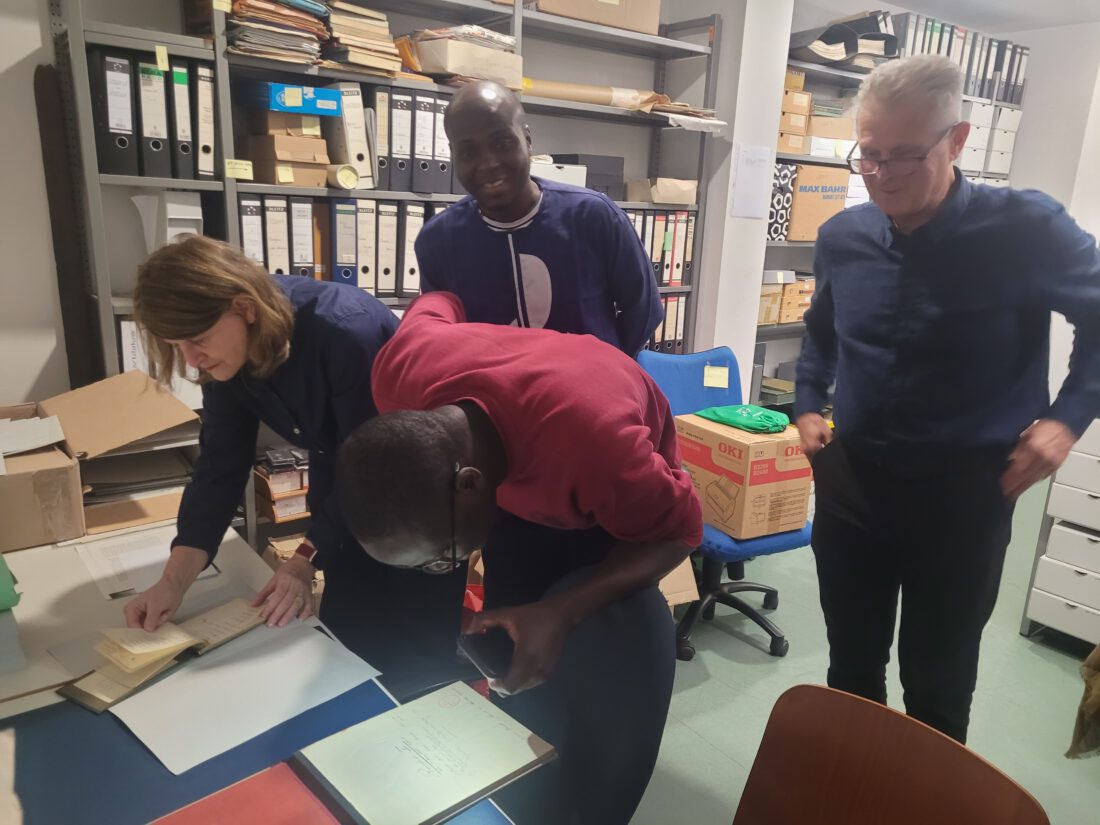
Methodologically, the project combines archival provenance research, comprehensive documentation work in the collection databases of both museums, and the digitization, transcription, translation, and analysis of the extensive Frobenius archive, which comprises over sixty diaries, several thousand pages of manuscripts, as well as numerous photographs, drawings, and sketches. This work is supplemented by so-called “contre-enquêtes” in Mali, in which interviews are conducted with local communities in the regions of origin of the museum collections, and memories, meanings, and object biographies are reconstructed within the contemporary context. This approach, in particular, adopts a Malian perspective on the historical processes of appropriation.
Furthermore, the historical European classification “Bamana/Bambara” is critically examined, as it was used inconsistently in the 19th and early 20th centuries and reproduced colonially influenced categories.
The research findings are also intended to provide a basis for future discussions on how to handle these historical collections and possible follow-up processes, such as restitution. Through close collaboration between the participating institutions, the project simultaneously strengthens transnational provenance research and promotes the active involvement of African partners in the reappraisal of colonial-era collection practices. The results will be presented at a final international conference at the MARKK and subsequently made publicly available.
PROBAMA is a joint project organised by the Musée du quai Branly – Jacques Chirac, the Museum am Rothenbaum, the Musée National du Mali and the Frobenius Institute for Cultural Anthropological Research, and has been made possible by funding from the Franco-German Provenance Research Fund for Cultural Artefacts from Sub-Saharan Africa.
The project will run for eighteen months.
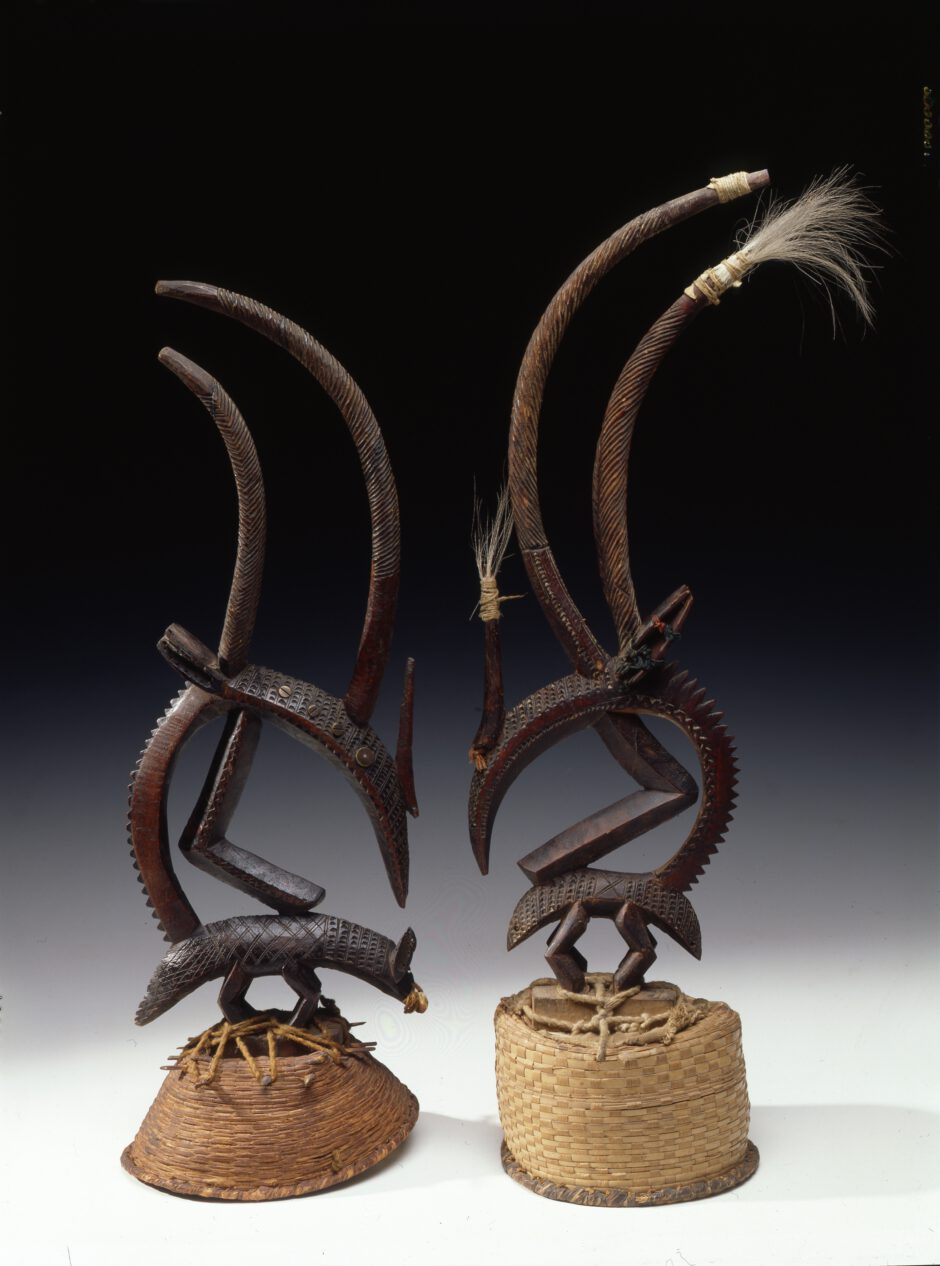
Information about the object image:
Siguni mask attachments of the Ci-wara-Federation
Bamana artist
Beledougou, Mali, 19th century
Wood, wickerwork, woven fibres
D 20 x W 17.5 x H 61 cm
D 19 x W 25 x H 68 cm
Inv. No. 11.1:447, 11.1:401, purchased from Leo Frobenius in 1911
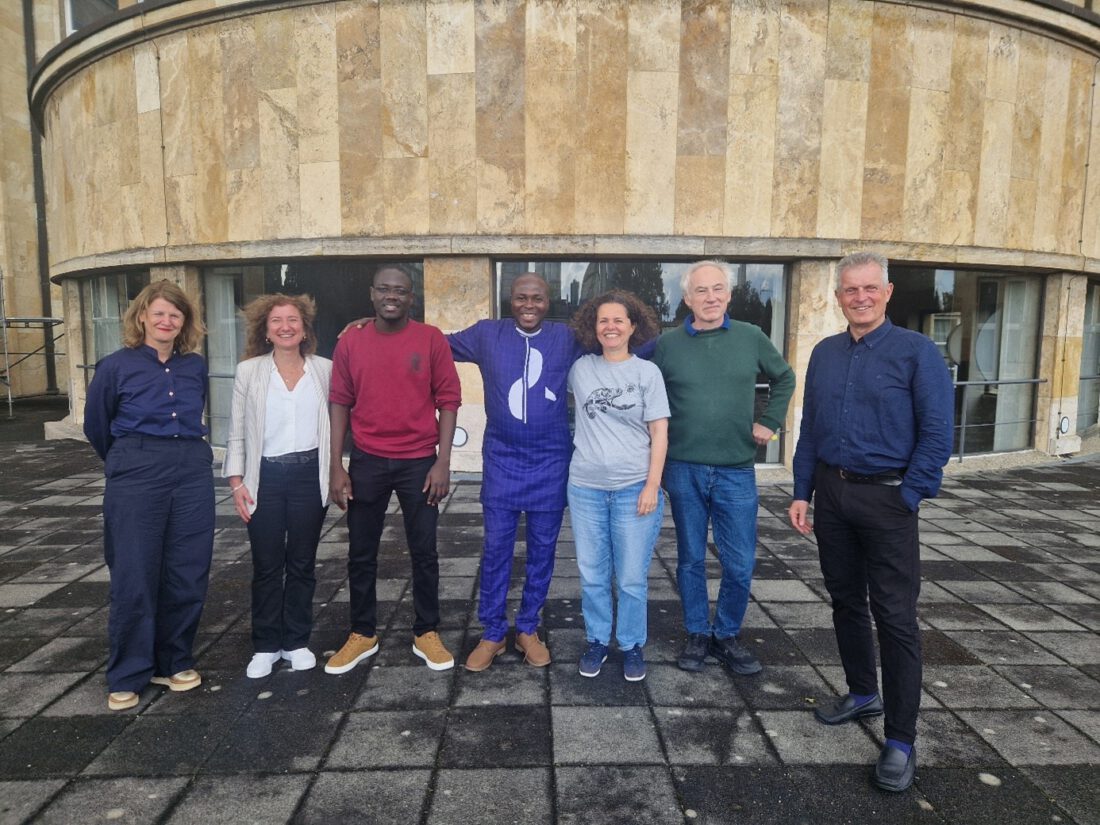
Photo: @PROBAMA